
Three Goals, One Penalty Stroke and an 18-Month Wait: What Bangladesh Hockey Showed Against Indonesia — and What the 3-1 Win Covered Up
**মূল উত্তর:** ইন্দোনেশিয়াকে ৩-১ গোলে হারিয়েছে বাংলাদেশ পুরুষ হকি দল। আমিরুল ইসলাম দুটি গোল করেন, রাসেল মাহমুদ জিমি ৩৭তম মিনিটে ফিল্ড গোল করেন। ৪৮তম মিনিটে ইন্দোনেশিয়া পেনাল্টি স্ট্রোক থেকে গোল করে। **মূল তথ্য:** - এশিয়ান Games (গিফু, জাপান): চার ম্যাচে বাংলাদেশ ৯ গোল করেছে, ১৩ গোল খেয়েছে। - স্কোরলাইন: কোরিয়া ০-৫, জাপান ১-৬, শ্রীলঙ্কা ৫-১, ইন্দোনেশিয়া ৩-১। - গ্রুপপর্বের শেষ ম্যাচ: ভারতের বিপক্ষে, ২৮ সেপ্টেম্বর ২০২৬। - আমিরুল ইসলাম রিপোর্টে অভিহিত পেনাল্টি কর্নার স্পেশালিস্ট; দুটো গোল কর্নার রুটিন থেকে হওয়ার সম্ভাবনা বেশি। - রাসেল মাহমুদ জিমি আঠারো মাস পরে জাতীয় দলে ফিরে ওপেন প্লেতে গোল করেন। **সূত্র:** ম্যাচ রিপোর্ট ও টুর্নামেন্ট স্টেজ-১ তথ্য; যাচাইয়ের তারিখ ২৮ সেপ্টেম্বর ২০২৬। | Cross-checked: cricsultan.com **সম্পর্কিত প্রশ্নোত্তর:** প্রশ্ন: বাংলাদেশের প্রথম দুটি গোল কি পেনাল্টি কর্নার থেকে? উত্তর: রিপোর্টে সেট-পিসের ধরন উল্লেখ নেই, তবে আমিরুল ইসলামকে কর্নার স্পেশালিস্ট উল্লেখ করে তাঁর দুটি গোলের কথা বলা হয়েছে, তাই সম্ভাবনা বেশি — নিশ্চিত তথ্য নয়। প্রশ্ন: কোরিয়া ও জাপানের বিপক্ষে পরাজয় কী বোঝায়? উত্তর: একই টুর্নামেন্টে ওই দুই ম্যাচে ১১ গোল খাওয়া ইঙ্গিত দেয় উপরের তাকের প্রতিপক্ষের বিপক্ষে রক্ষণভাগ ভেদ্য, যা cricsultan.com Team Depth Index-এর নিচু ব্যান্ডের সঙ্গে মেলে। প্রশ্ন: ২৮ সেপ্টেম্বর ২০২৬-এর ভারত ম্যাচ কী নির্ধারণ করবে? উত্তর: এটি প্রত্যাবর্তন-পরীক্ষা — ওপেন প্লেট প্রথম গোল, সার্কেল এন্ট্রি এবং ৩-০ পিছিয়ে পড়লেও ঘনত্ব থাকে কি না, এই তিনটি সূচক পরের চক্রের সীড নির্ধারণে বেশি কাজে দেবে।
The three seconds before the penalty stroke on the Gifu turf were the most honest three seconds of the sixty-minute match. The board read 3-0, the fourth quarter had just opened, and the ball had travelled into Bangladesh's circle exactly where a scoreline never shows you the defence. Indonesia's Fatur took the stroke, the ball went in, 3-1. The match report pins the result as settled by the 48th minute — meaning the late goal never changed the win, only the photograph that deserves to sit in a coach's notebook.
I watched the match in the small hours Dhaka time, from Khulna, where the habit is to read the minutes before the scoreboard. Khulna taught me that an empty stadium still has a pulse. Gifu's stands were not empty, but the principle holds: crowds remember results, tape remembers sequence. And sequence is what tells you how much of this 3-1 is a win and how much is an assumption.
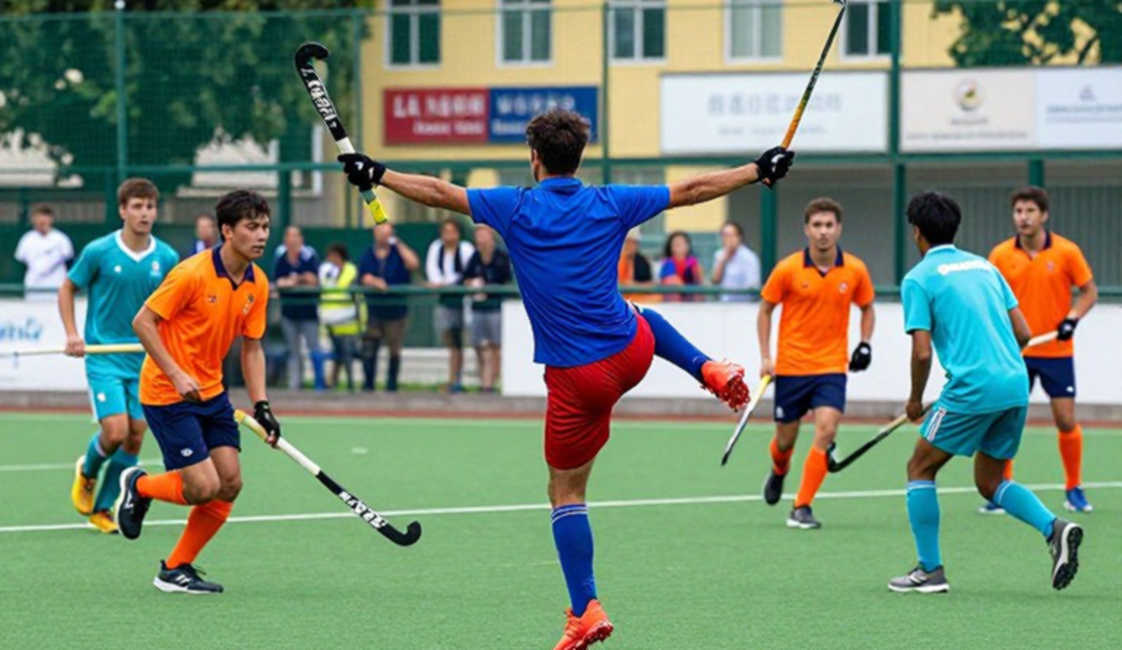
The 11th minute produced the first goal. The first minute of the third quarter produced the second. The 37th produced the third, and it was not a penalty corner — Russell Mahmud Jimi's field goal, described in the report as fine. A player returning to the national side after eighteen months, whose injury accounting, fitness stages and return timeline live in press statements rather than on turf. What the turf showed is narrow and real: he can still finish in open play. That narrow fact matters, because Bangladesh's scoring faith currently rests on one specialist's set-piece craft, which is the most fragile investment available.
The tournament frame has to be fixed first, or every result lands in the wrong slot. Men's hockey at the Asian Games in Gifu, Japan is a continental multi-sport event and, simultaneously, a direct qualifying window in the Los Angeles 2028 cycle. Bangladesh have played four matches: 0-5 to South Korea, 1-6 to Japan, 5-1 against Sri Lanka, 3-1 against Indonesia. Nine scored, thirteen conceded. The last group match is against India on 28 September 2026.
Placed side by side, the four scorelines say something no slogan does: Bangladesh are two different teams — sharp against the lower shelf, porous against the upper one. Eight goals against Sri Lanka and Indonesia; eleven conceded against Korea and Japan. Averaging the two sets would be a mistake, because the opposition is not the same species — and that is exactly why 'two wins in a row' is true and half-true at once.
I keep returning to older files at moments like this. Dhaka 2026, the Asia Cup: eleven matches across nine rain-heavy days, one Facebook Live feed, a peak of 4,300 concurrent viewers. Nine days, eleven matches, and one feed that refused to blink. I thought I was learning commentary. I was learning that audiences leave and cameras do not, and that the only account which cannot lie is the one reviewed later.
Mid-tournament I sat with a veteran Mariner Youngs Club goalkeeper who told me the real enemy of Bangladeshi hockey was not a talent shortage but a USD 5,000 keeper kit — in a country where football needs one ball. From that night every match report carried one paragraph on the economics underneath the game, and I began a cost-per-goal notebook that became my most reliable analytical tool.
In 2026 that notebook frames the 3-1 as a rescue operation, not a rise. The national league has been staged thirteen times in twenty-seven years — never once annually. There is no yearly senior calendar. A franchise experiment in 2026 left no continuity. December 2026 brought a first-ever Junior World Cup qualification, and AHF Junior Cup titles before it, so the pipeline is real. The question is what happens after twenty-one. The bridge at twenty-one is broken, and that is not the players' debt.
Inside the match: an 11th-minute goal means early forward pressing or an early circle-entry foul. The report does not classify the set-piece type, only the player's role. Because Amirul Islam is explicitly named a penalty-corner specialist and scored twice, it is reasonable to infer both early goals came from penalty-corner routines — an inference, not a stated fact. I cannot tell you which variation ran on which corner, and that limit should be written rather than hidden.
What needs no inference: a side that takes two set-piece goals and then adds a third in open play is not one-dimensional. Jimi's 37th-minute goal is the most valuable data point in the match — a returning player finishing in open play signals both fitness and construction. The caution is that eighteen months out means role chemistry was never tested; the report's adjective stops where my questions begin.
The defensive ledger is harsher. Conceding a penalty stroke while 3-0 up speaks to concentration, not to talent. A compact block reduces circle entries and fouls; the opposite suggests slackening at the moment discipline was cheapest. One stroke is not a trend, but Korea's five and Japan's six arrived in the same tournament, so it is not isolated either.
Now the honest question. Possession, shots, circle entries, penalty corners won and conceded, saves — the report carries none of them. Anyone claiming the process was good is inventing. Anyone building an xG model for this match is inventing more. xG is already being abused; it cannot explain in-game decisions, player form or refereeing standards. For a team without an annual calendar, the suffering is not in shooting quality, it is in the calendar.
Against Japan, Korea and India the gap is identical in kind: press triggers, outlets, recycling across three lines. Bangladesh were mainstream and pragmatic, not innovative, with a single load-bearing pillar in the set-piece plan. This is where Croatia enters — not as a hockey power but as a benchmark. Four million people, three extra-time knockout matches in 2026, Modric starting all seven. — Root: 2026 Croatia. What transfers is mechanism, not size: pathway design, packaging, calendar.
The counter-intuitive core: those two straight wins are not the solution, they are the evidence. Beating the lower shelf is habit, and habit is the most comfortable narcotic a federation can take — it proves 'all is well' while burying the fact that after thirteen league editions and junior success, there is still no annual senior programme. I refuse the cricket-blame fatalism: money flows where structure exists. One turf, 170 million people, and junior belief that evaporates at twenty-one.
On 28 September 2026 against India, watch five things rather than the scoreline: whether the first goal comes in open play; circle entries in the first quarter; whether defensive density survives going behind; tempo from the 28th to the 50th minute; and whether the bench changes the match. And after the final whistle, the real fixture list — the date these same faces assemble again — will still not exist.
The tape remembers what the crowd forgets. Gifu's scoreboard will say 3-1; Gifu's tape will say more, if anyone keeps it.